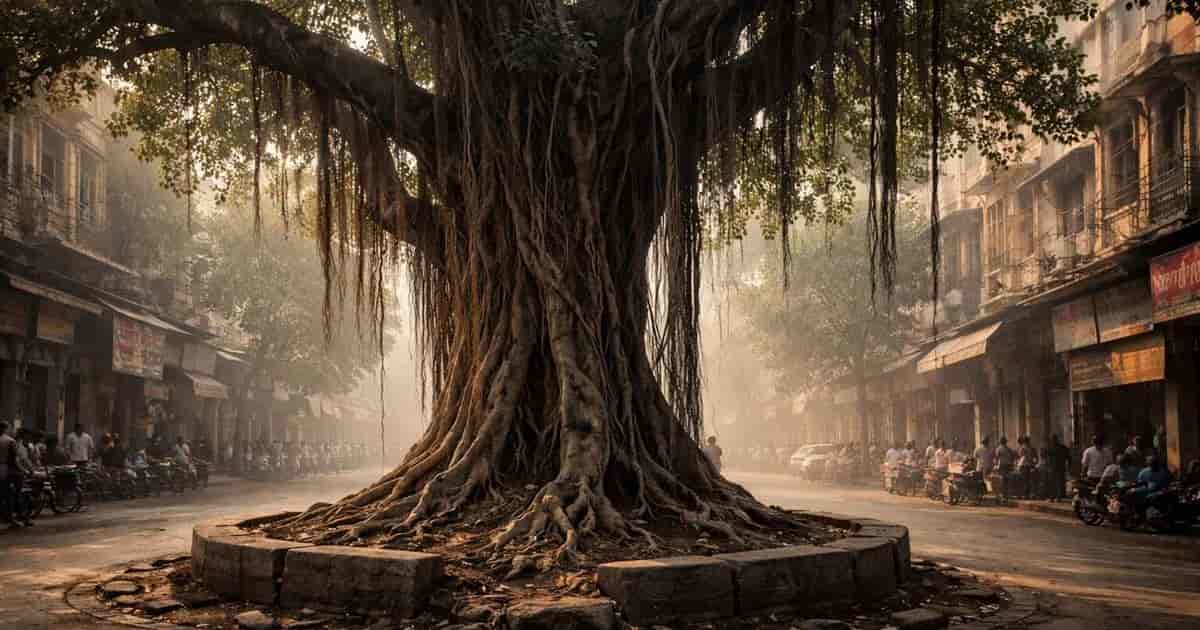
How to Save Old Dying Trees in Urban Concrete Cities
India is losing old urban trees to concrete, illegal cutting, and fake afforestation. This guide gives sharp, science-based and civic solutions to stop it.
How to Save Old Dying Trees in Urban Concrete Cities
Note: This article is available in both English and Hindi.
The English version is original. The Hindi version is AI-assisted translation.
Important context: This article draws from public reporting, tribunal records, and court-linked coverage from recent years in India. Reported numbers may vary by date, agency filing, and legal stage.
India is not just cutting trees.
India is also creating urban conditions where old trees die while still standing.
This is happening through a dangerous combination:
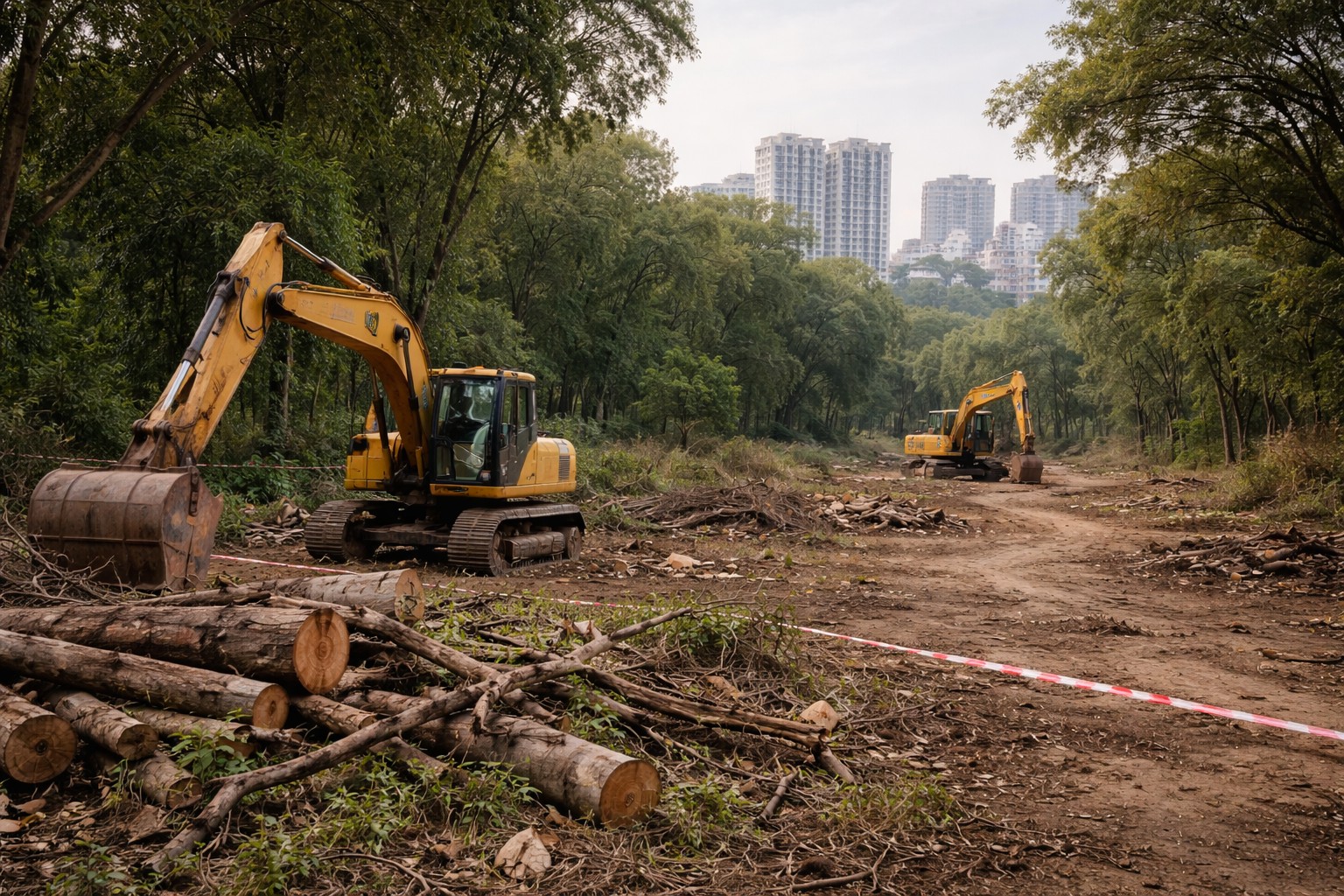
- legal felling for roads, corridors, real estate, and utility expansion
- alleged illegal felling by contractor-smuggler networks
- weak enforcement and delayed accountability
- fake or low-survival compensatory plantations
- concrete suffocation of surviving heritage trees
If this continues, the next generation will know many tree species only from textbooks.
The part we avoid saying aloud
In many cities, the pattern looks brutally familiar:
- local bodies plant green belts and celebrate them
- after 5 to 10 years, when those trees begin forming real shade ecology, the same belts are cut for another widening project
- rules exist on paper, but execution gets bypassed through urgency notes, procedural loopholes, or questionable permissions
When this repeats, it is not development planning.
It is ecological liquidation.
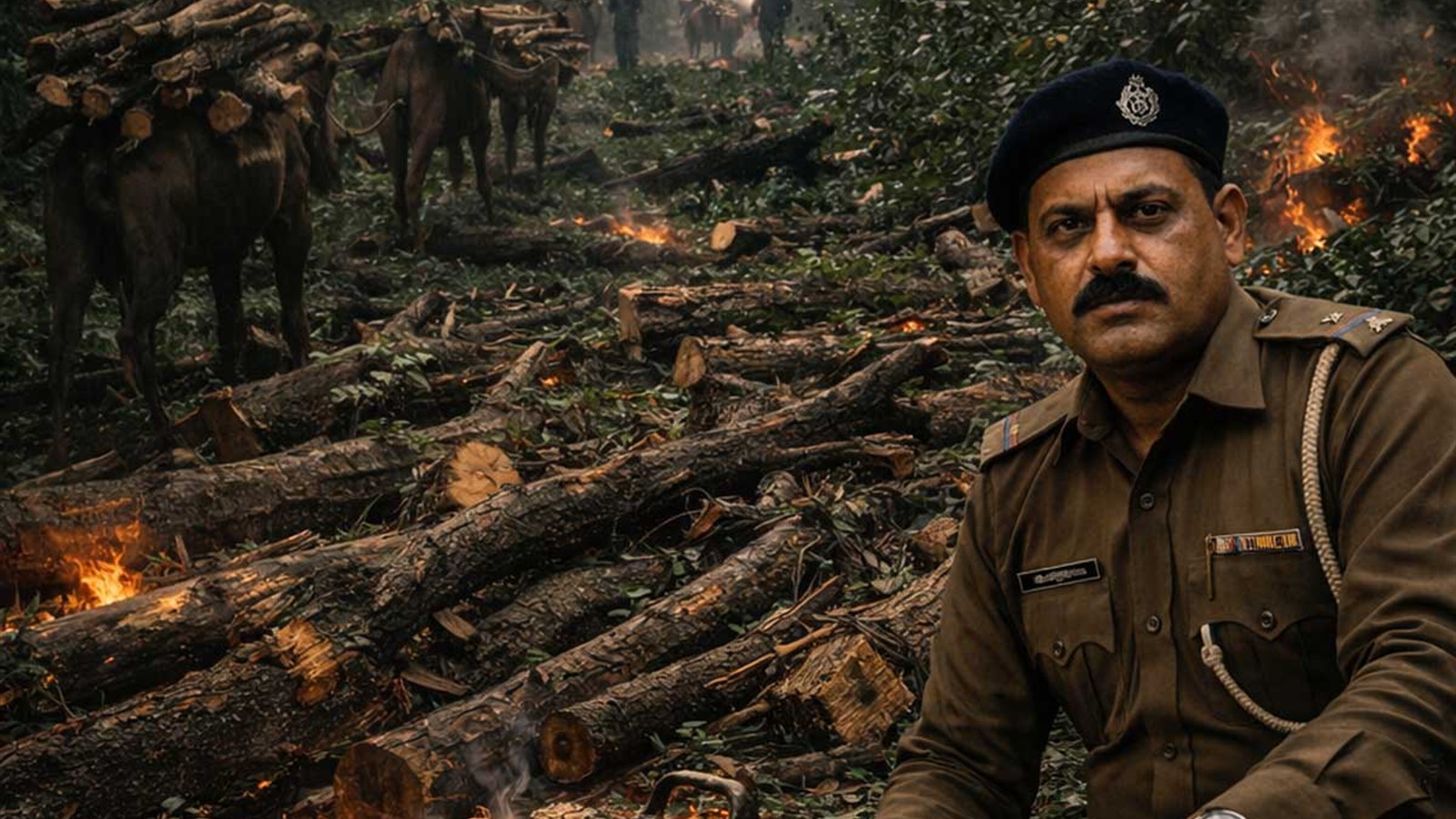
How alleged illegal tree-cutting networks often function
Public complaints and investigative reports repeatedly describe this operational style:
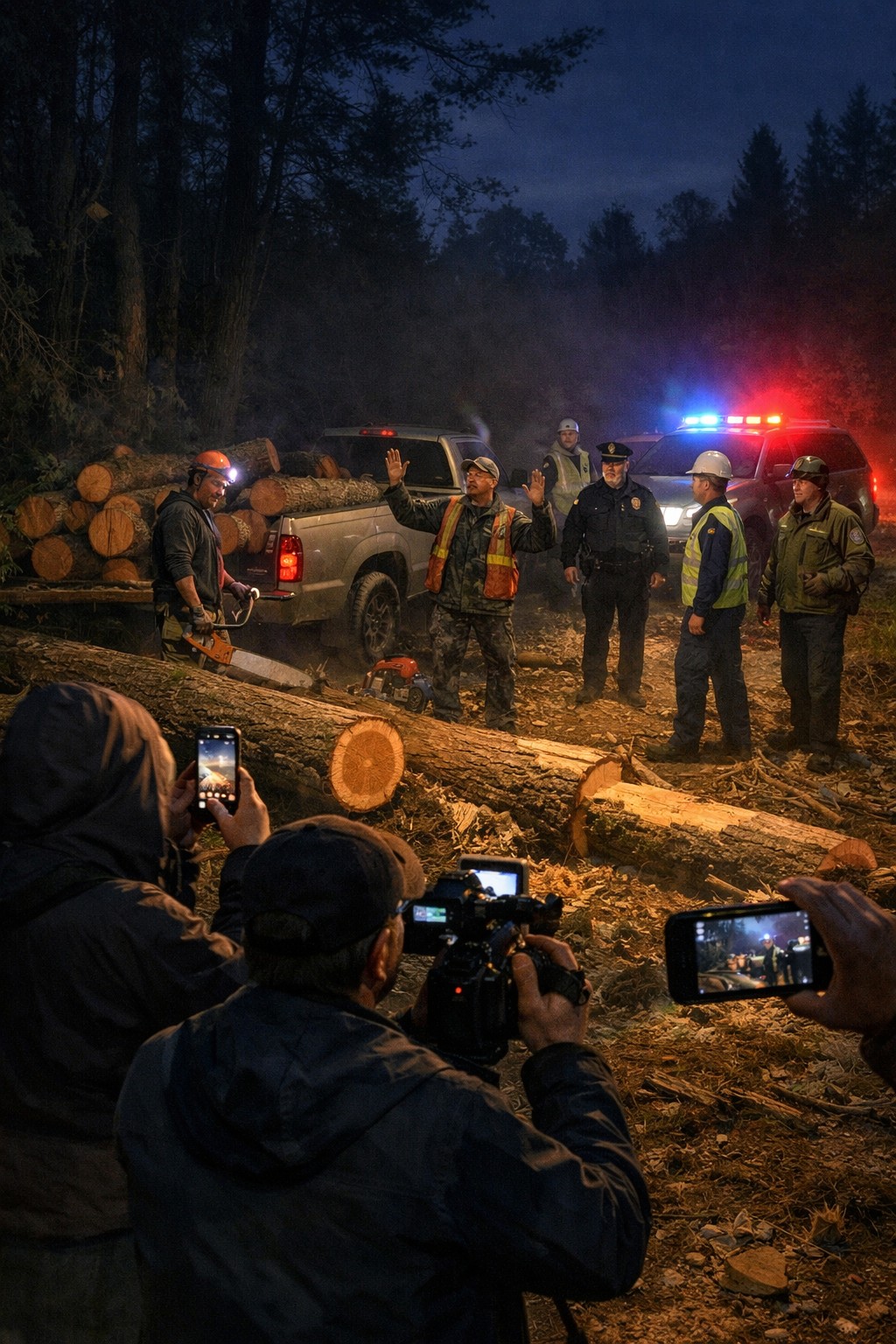
- felling done at night or during low-surveillance windows
- use of fast-cutting equipment to finish large sections quickly
- rapid transport of timber through secondary routes
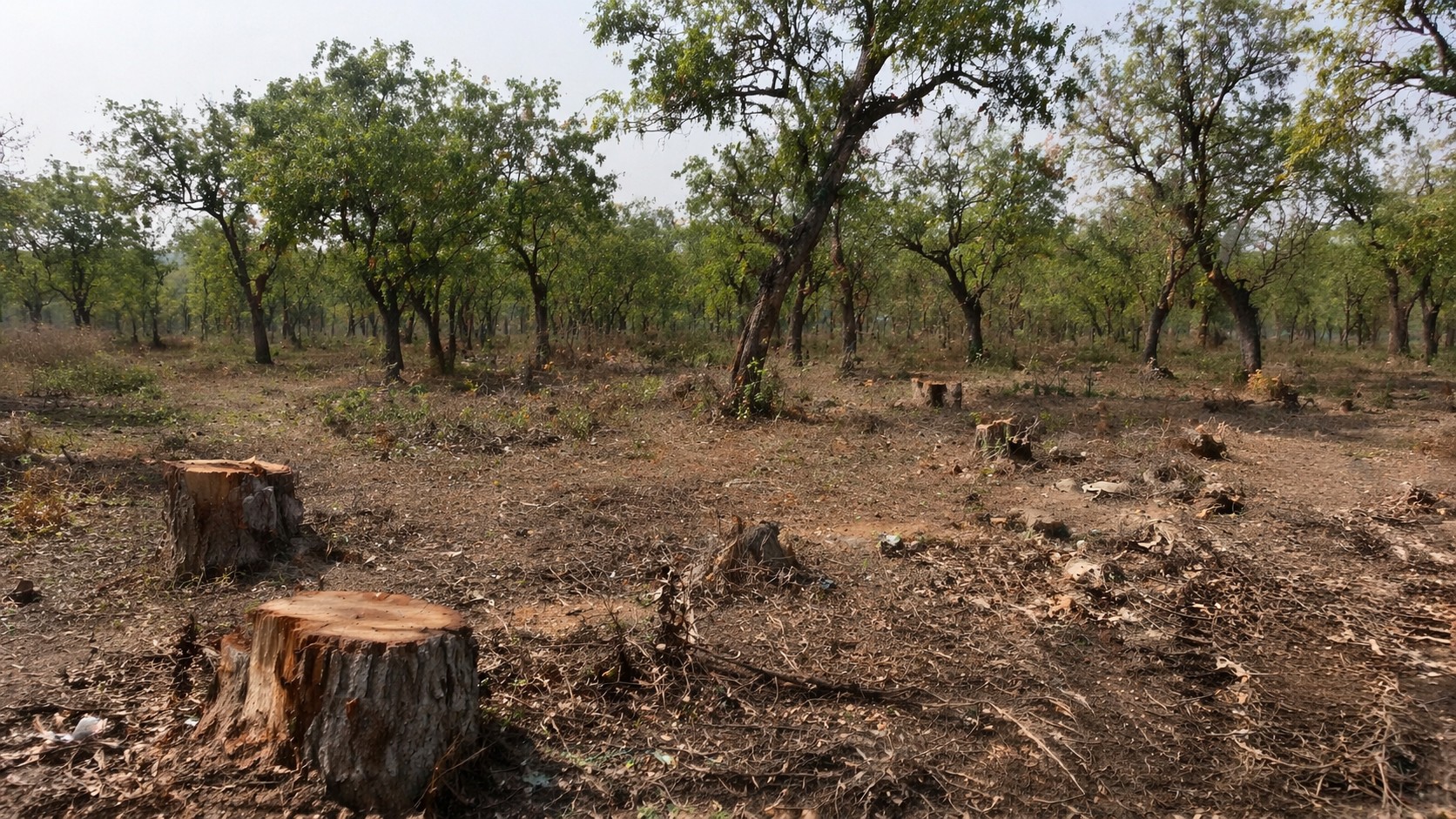
- burning or damaging stumps to weaken evidence trails
- paperwork raised later to match work already executed
- blame shifted between contractor, sub-contractor, and approving office
Not every project follows this pattern.
But where it does, it converts public land into private profit through ecological theft.
Recent India examples people are discussing
Panchkula Khair case, Haryana (March 2026)
- Public reports described allegations of over 10,000 Khair trees cut.
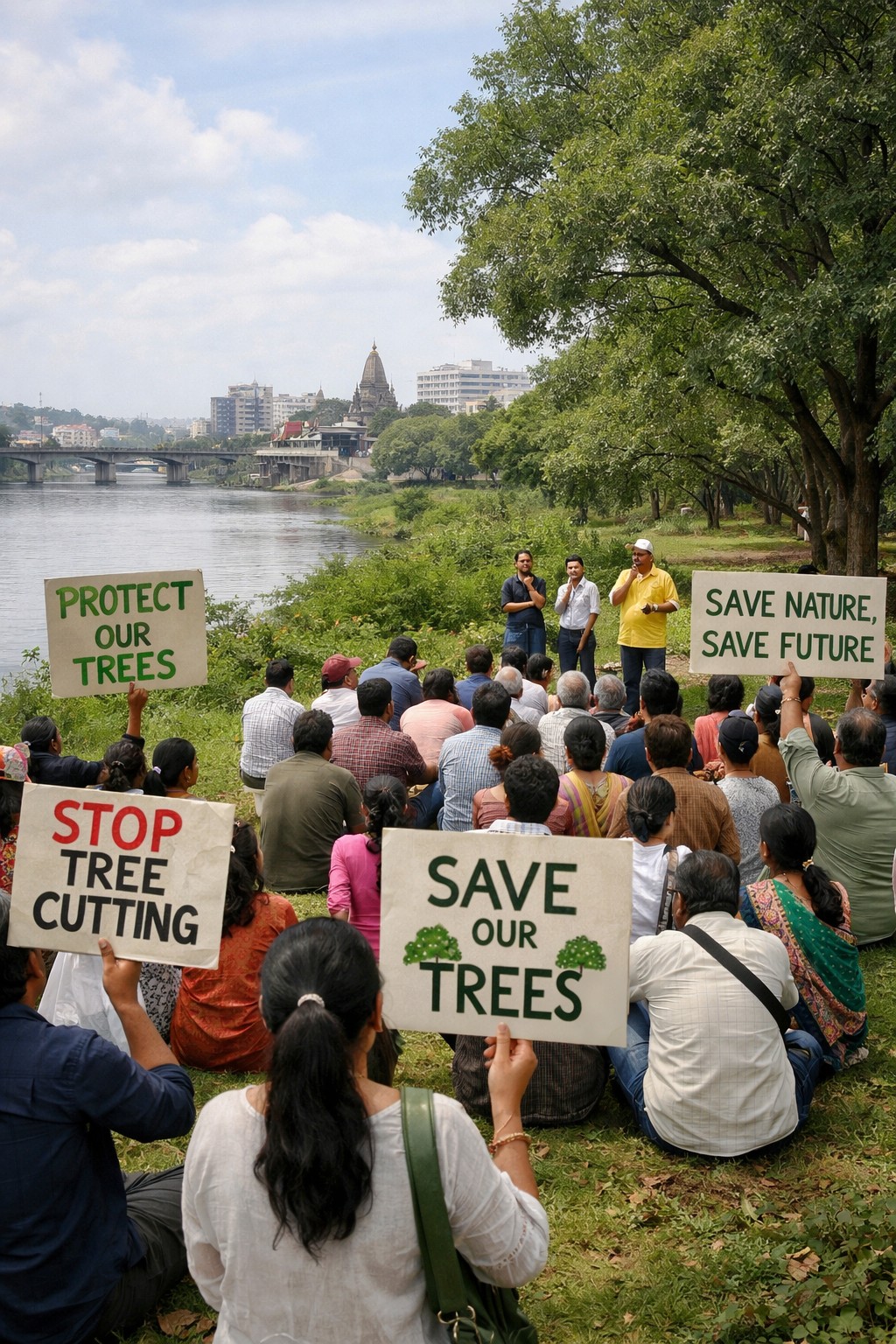
- Reports also mentioned whistleblower fallout and protest actions.
- A recent Khair protest visual is included in project assets under a neutral non-personal filename.
- Why this matters: it exposed trust collapse between field-level reporting and enforcement response.
Jaipur and Bhilwara-linked allegations, Rajasthan (2025 to 2026)
- Public reports and tribunal-linked proceedings discussed illegal felling allegations and administrative action.
- Why this matters: whistleblower pressure and accountability concerns are not limited to one state.
Nashik Kumbh preparation conflict, Maharashtra (2025 to 2026)
- Reports highlighted citizen protest and NGT intervention around proposed tree felling for Kumbh-linked works.
- Why this matters: mega-event urgency can override long-term urban ecology.
Kanwar corridor route expansion, Western UP (2024 to 2025)
- Multiple reports discussed large-scale felling figures, with differing counts in filings and media summaries.
- Why this matters: seasonal religious logistics are turning into permanent canopy loss debates.
Delhi Ridge road-widening case (2024 to 2025)
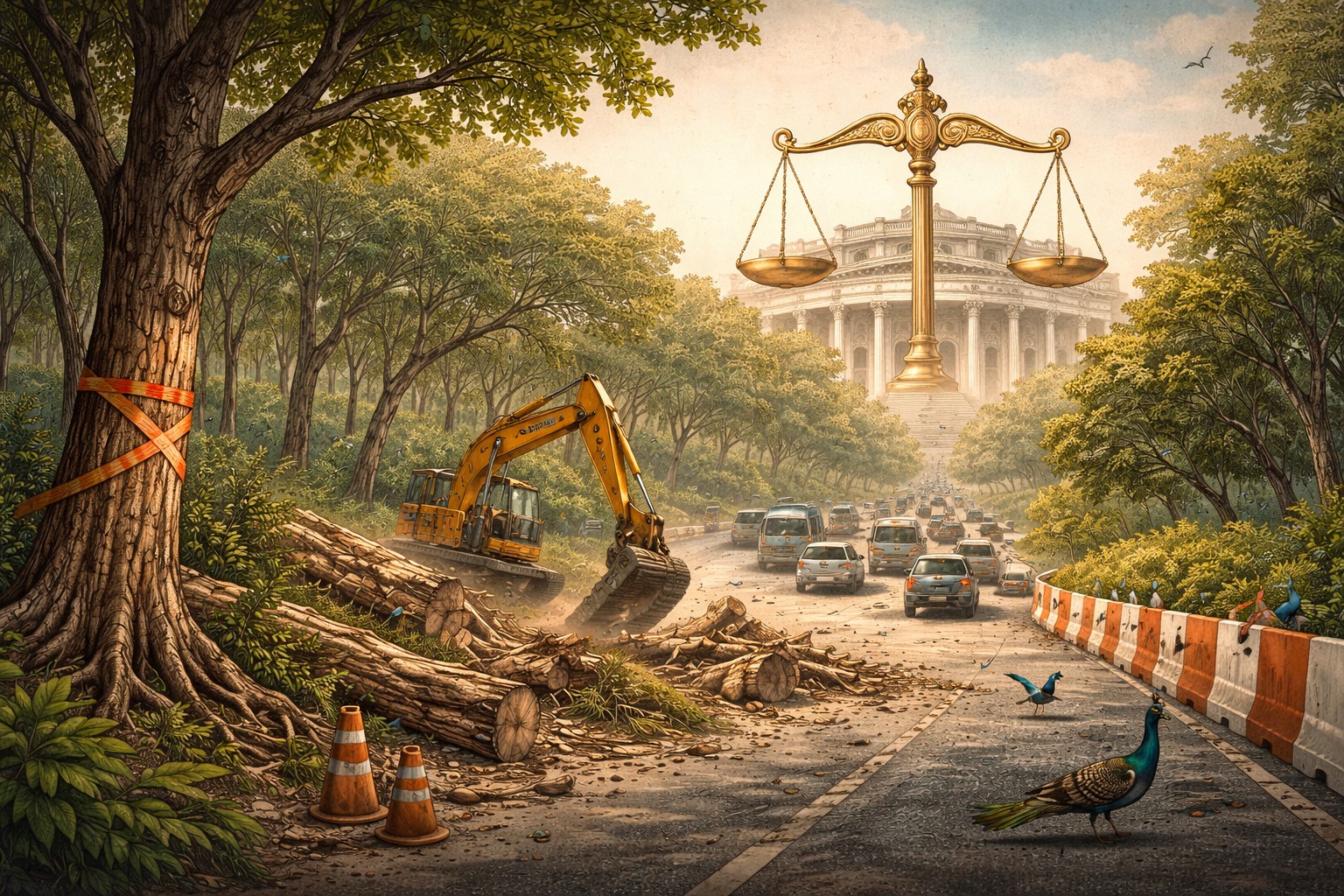
- Supreme Court-linked coverage discussed contempt findings and afforestation directions.
- Why this matters: post-damage judicial accountability is possible, but prevention should be primary.
Aarey, Mumbai (2019 onward, with later litigation updates)
- Metro-linked tree felling conflict remained a national benchmark case.
- Why this matters: transport expansion without ecological design creates decade-long legal and social conflict.
Hasdeo region, Chhattisgarh (2024 to 2025)
- Public reporting continued to highlight conflict over coal expansion, forest loss, and community resistance.
- Why this matters: extractive expansion can erase both canopy and indigenous livelihood systems.
Great Nicobar mega project discussions (2024 to 2026)
- Parliamentary and media references reported very high tree-felling projections.
- Why this matters: mega-infrastructure in ecologically sensitive zones carries irreversible risk.
Kancha Gachibowli, Hyderabad (2025)
- Public coverage documented legal intervention over reported large-scale clearing concerns.
- Why this matters: rapid civic mobilization plus legal action can halt ongoing damage.
Historical reminder: high-value timber smuggling cycles
- India has long histories of sandalwood and other high-value timber smuggling networks.
- Why this matters: wherever tree value rises and governance is weak, organized extraction follows.
This is no longer a one-city anomaly.
It is a nationwide governance pattern with local variations.
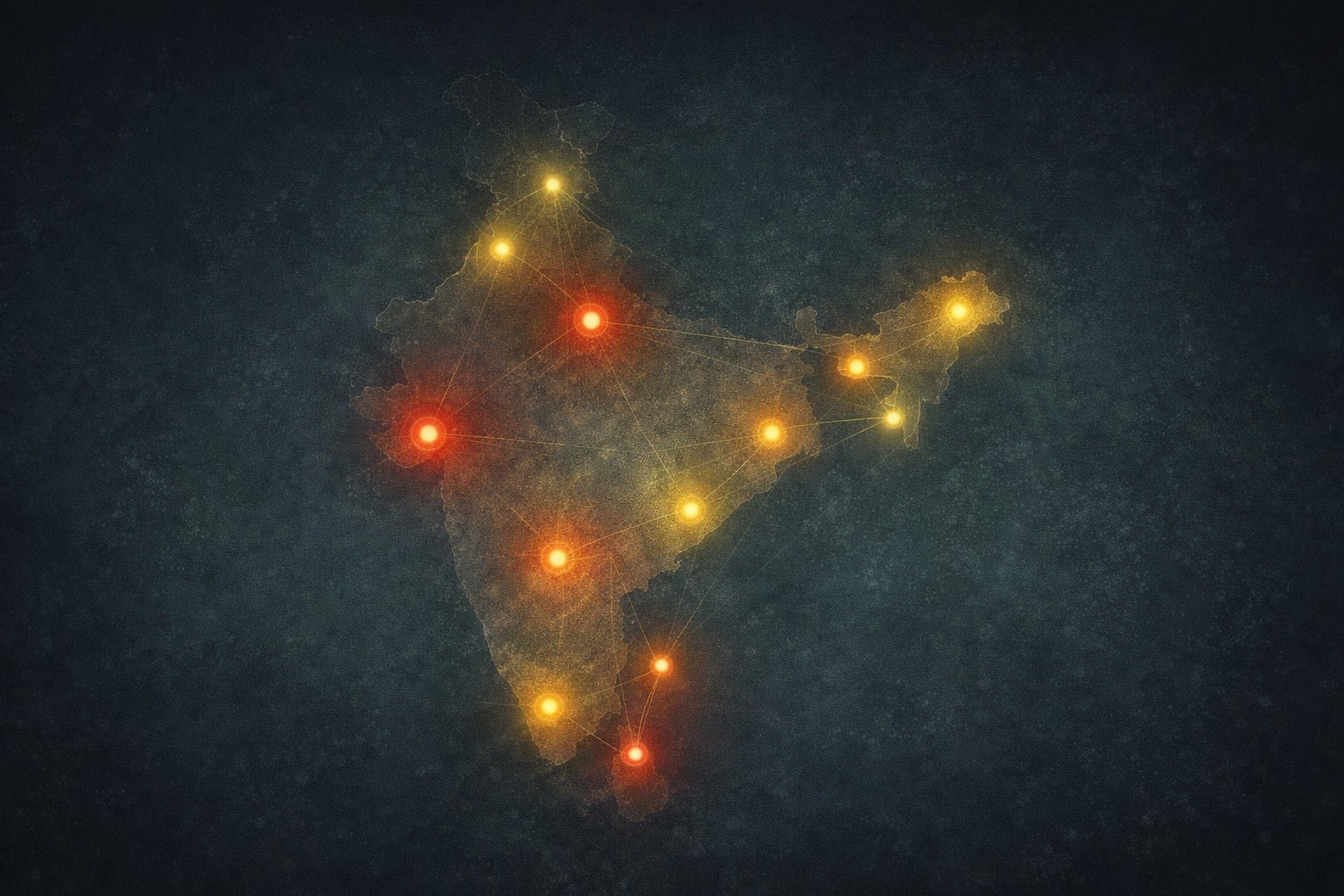
Why old trees die early in concrete cities even when not cut
Many 100 to 200-year-old trees in Indian cities are in premature aging mode.
1) Root suffocation
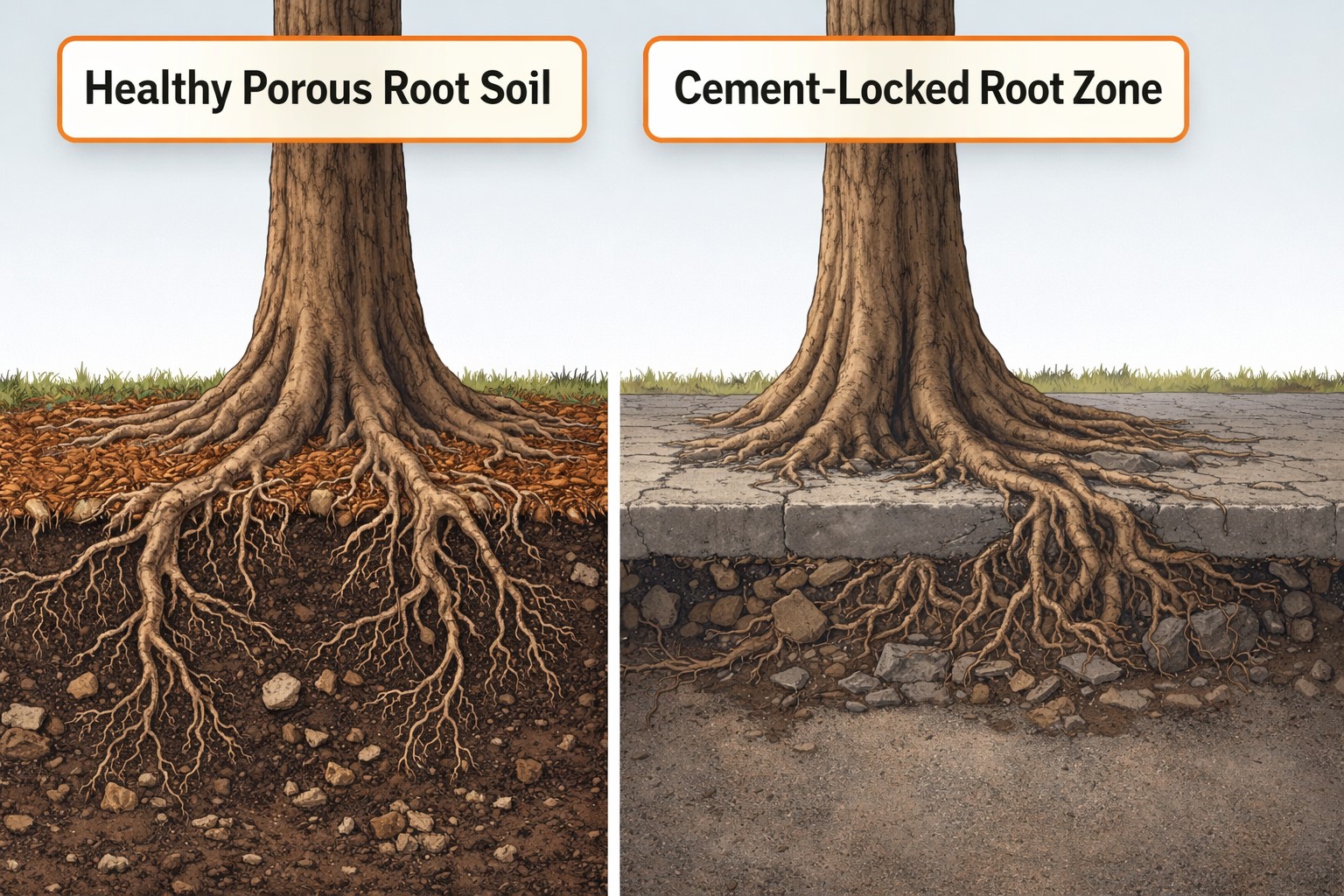
Most feeder roots live in upper soil layers. Concrete around trunk zones kills aeration and microbial life.
2) Soil compaction
Parking pressure, heavy machines, and repeated disturbance compress soil into near-impermeable mass.
3) Heat island stress
Concrete corridors become thermal traps. Root-zone temperature spikes and moisture retention collapses.
4) Toxic drainage exposure
Road runoff can carry oil, detergent, sewage leakage, and industrial contaminants into tree zones.
5) Harmful ritual practices
Offerings such as milk, sweets, oils, and salt around roots can disturb soil chemistry and attract pests/fungal stress.
6) Hard pruning and construction injuries
Unscientific pruning, bark wounds, and root cutting during utility work reduce long-term survival.
7) Hydrology collapse
Rainwater harvesting structures near roads are often clogged, damaged, or never maintained, so recharge fails.
8) Low-quality replacement species
In some corridors, ornamental flowering species with limited canopy value are used to claim plantation success, while true shade trees disappear.
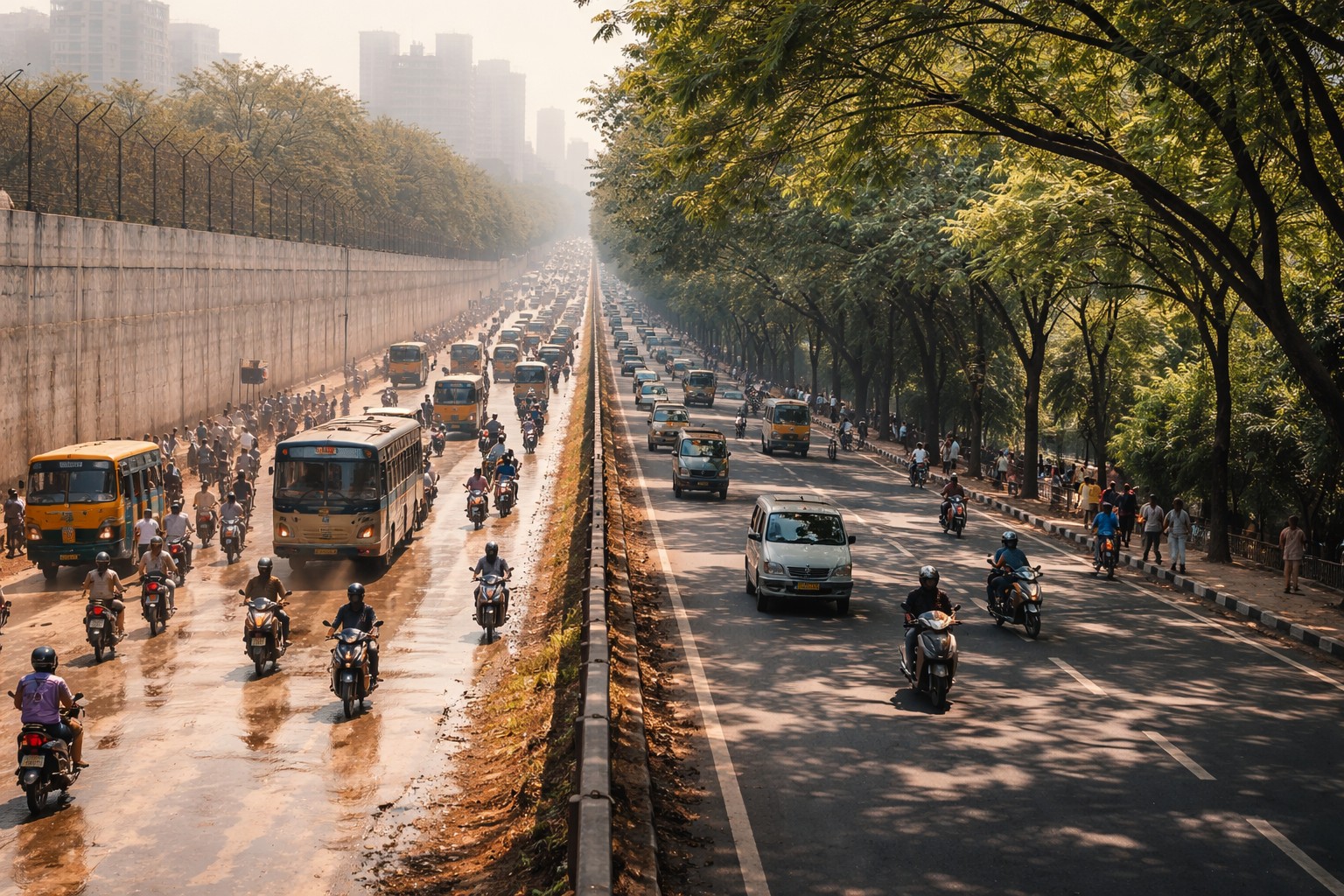
The legal loophole: when shrubs are made to look like trees
Across multiple Indian road and median projects, a repeating pattern is reported: fast-growing shrubs or climbers are pruned into tree-like shapes and counted as "green cover".
On paper, this looks like greening.
On the ground, it can become disposable landscaping.
Many Tree Protection Acts classify legal tree status through measurable thresholds such as woody stem, minimum girth or diameter, and minimum height. Exact thresholds and enforcement vary by state law, amendments, and local notifications.
That technical language can be exploited.
Common tree-mimicking plants used in road medians
- Bougainvillea (often trained into umbrella forms)
- Thevetia nerifolia / Kaner (hardy, fast-establishing shrub)
- Duranta erecta (dense, quickly shapeable shrub)
- Tecoma stans (fast-growing ornamental yellow flowering shrub)
These species may have landscaping value in selected contexts.
But they are not canopy-equivalent substitutes for long-lived native shade trees.
Why this becomes a contractor loophole
- target padding: high plantation counts with low ecological value
- liability avoidance: shrub-heavy planting reduces long-term compensatory burden
- easy future removal: routine clearance is often simpler than protected-tree felling process
- counting distortion: multi-stem vegetation can be misused in reporting metrics
- non-woody exclusions: some commonly planted species do not qualify as protected trees in many frameworks
This is not urban forestry.
It is often visual compliance without canopy justice.
What citizens should demand in writing
- species-wise plantation registry: tree, shrub, climber clearly separated
- baseline girth and height records at planting and annual audit
- payment linked to 1-year, 3-year, 5-year survival and canopy growth, not raw planting count
- explicit ban on replacing compensatory tree obligations with ornamental shrub counts
- independent third-party geo-tagged verification, publicly downloadable
Native canopy-first alternatives that cross legal thresholds faster
- Neem (Azadirachta indica)
- Peepal (Ficus religiosa)
- Banyan (Ficus benghalensis)
- Arjun (Terminalia arjuna)
If median greening must happen, it should be honest, auditable, and canopy-focused.
Water and toxicity: the hidden tree killer
Urban tree death is no longer only a "space" issue.
It is also a soil-water toxicity issue.
- groundwater levels are falling in many urban and peri-urban belts
- polluted drains now move mixed domestic and industrial waste
- tree roots searching for moisture increasingly encounter contaminated flows
- some regional studies and reports have flagged heavy-metal concerns, including uranium traces, in parts of India; these findings need deeper independent validation but cannot be ignored
When water is toxic, even uncut trees decline faster.
Compensatory afforestation fraud patterns people are reporting
Public audits and citizen investigations frequently point to these patterns:
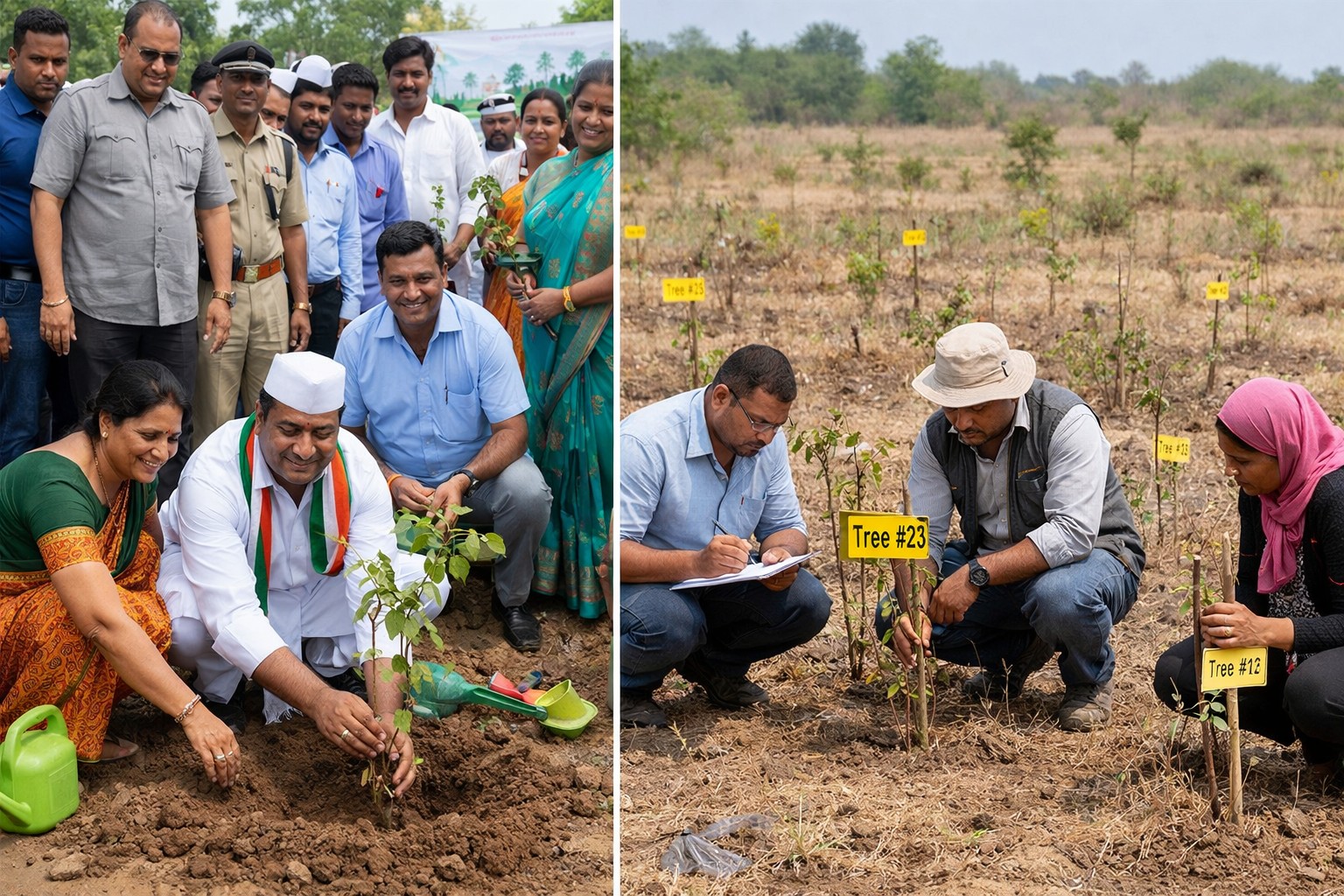
- compensation plantation shown on paper, but survival not monitored
- same land parcel repeatedly counted in multiple plantation cycles
- saplings planted in unsuitable species mix and left without aftercare
- tiny ornamental or flowering plants counted as long-term tree replacement
- plantation photo events replacing ecological accountability
- survival data inflated while ground mortality remains very high
Some field observers describe survival after careless drives as single-digit percentages.
Whether a city claims 3 percent or 20 percent, one truth remains:
A dead sapling cannot compensate a mature canopy tree.
Emergency 100-day rescue protocol for standing old trees
This protocol is for municipal teams, RWAs, NGOs, ward volunteers, and resident groups.
Step 1: Mark a no-concrete root protection circle
- Minimum radius: up to drip line where possible
- Immediate ban on fresh paving
- Remove decorative cement collars around trunk
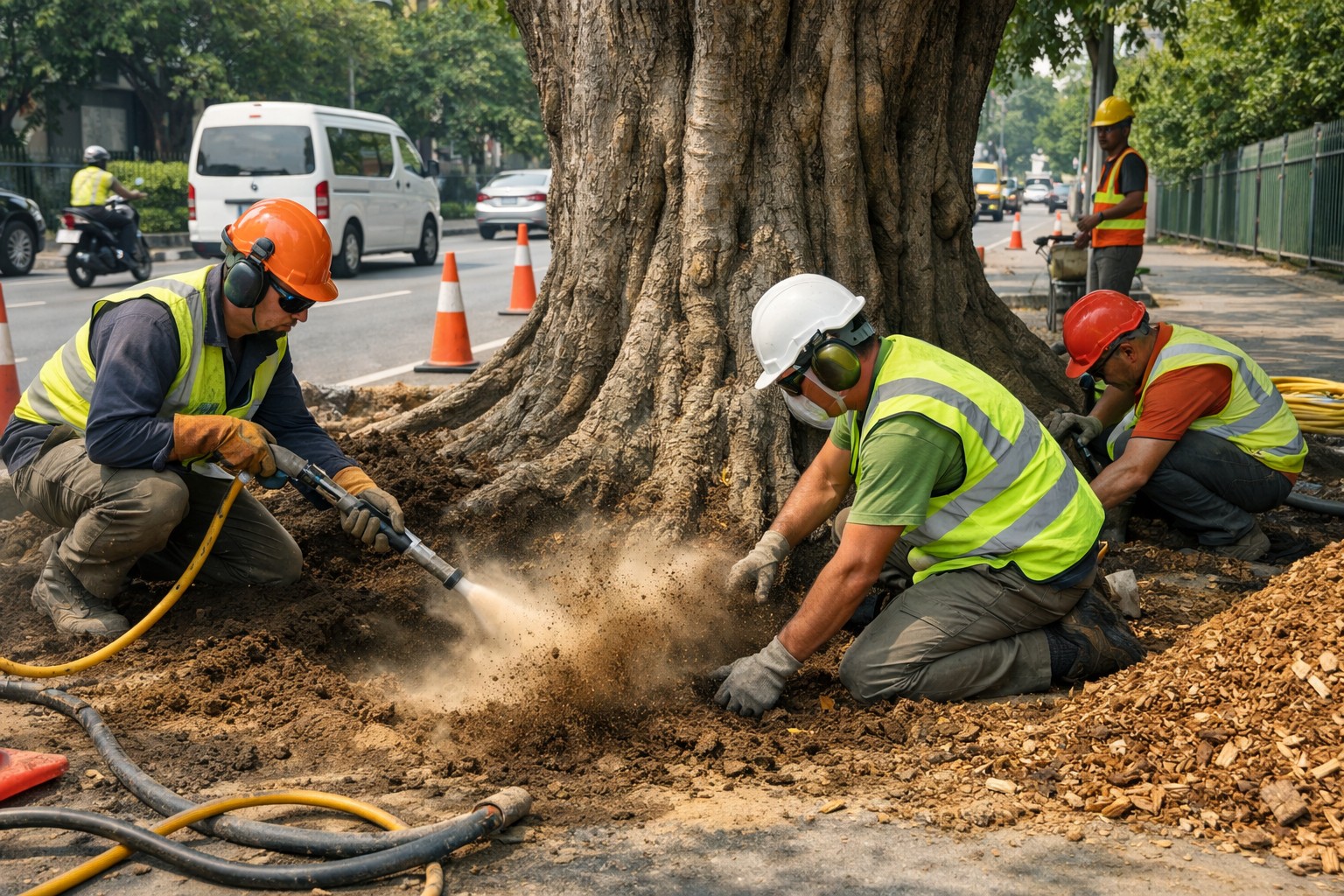
Step 2: Decompact the soil scientifically
- Use air-spade or radial trenching techniques
- Avoid random digging with sharp tools near major roots
- Add mature compost in trenches, not fresh wet waste
Step 3: Build a living mulch ring
- 7 to 10 cm organic mulch depth
- Keep 10 to 15 cm gap from trunk bark
- No plastic sheets under mulch
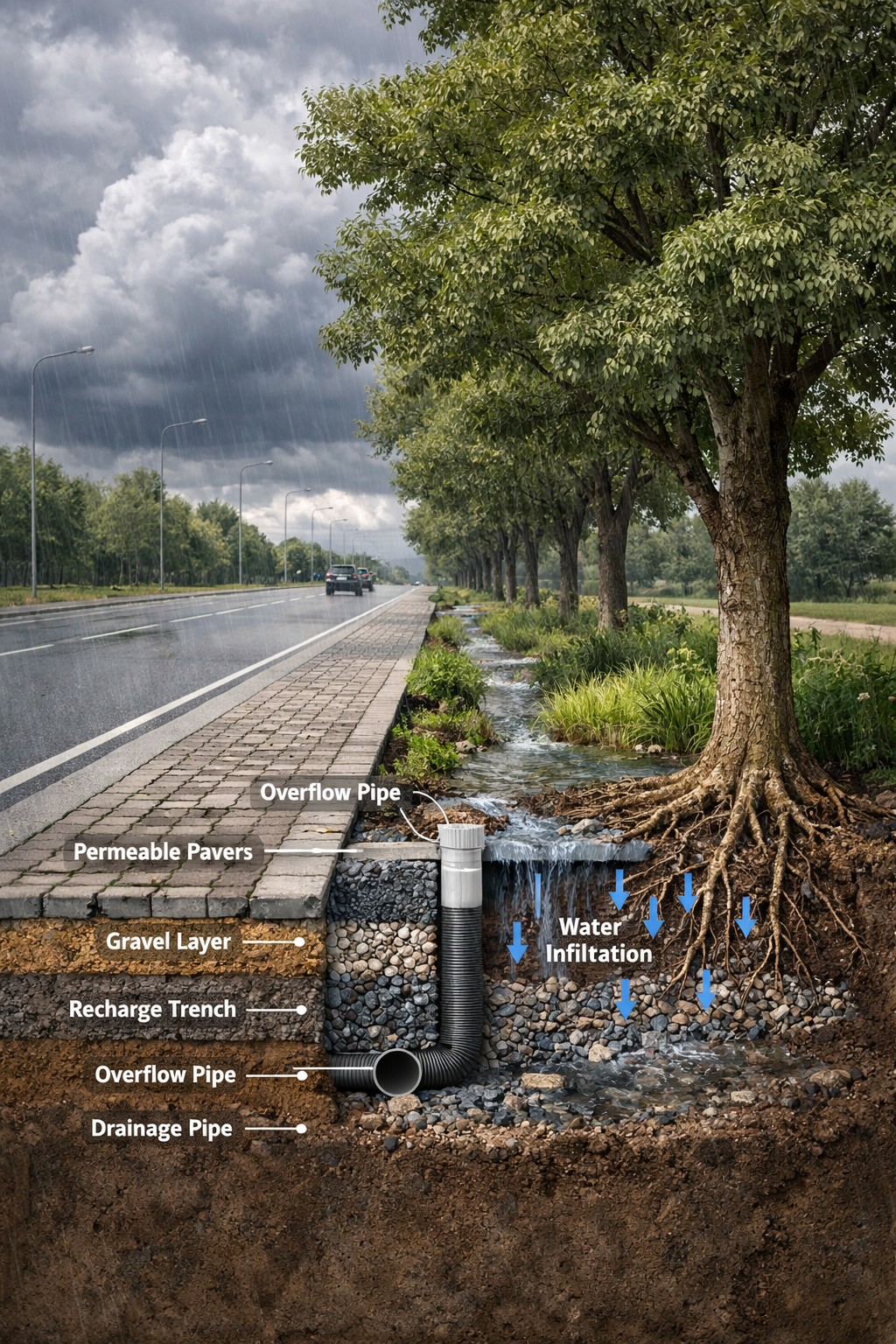
Step 4: Restore infiltration and water recharge
- Create small percolation pits around root zone
- Channel rooftop rainwater to tree recharge pits after filtration
- Use slow deep watering, not daily shallow sprinkling
Step 5: Run basic soil and water diagnostics
- Soil: pH, EC, organic carbon, bulk density, microbial activity
- Water: salinity and contamination indicators
- Repeat tests after 3 to 4 months
Step 6: Bioremediation and detox support
- Biochar (quality controlled) in limited doses
- Mycorrhizal inoculation from reliable labs
- Zeolite or gypsum based on test results, not guesswork
- Phytoremediation strips for polluted runoff channels
Step 7: Structural safety without over-pruning
- Certified arborist check for cavities, lean, deadwood
- Cable and brace for heritage trees where needed
- Never top-cut mature canopy as routine practice
Step 8: Legal and public protection layer
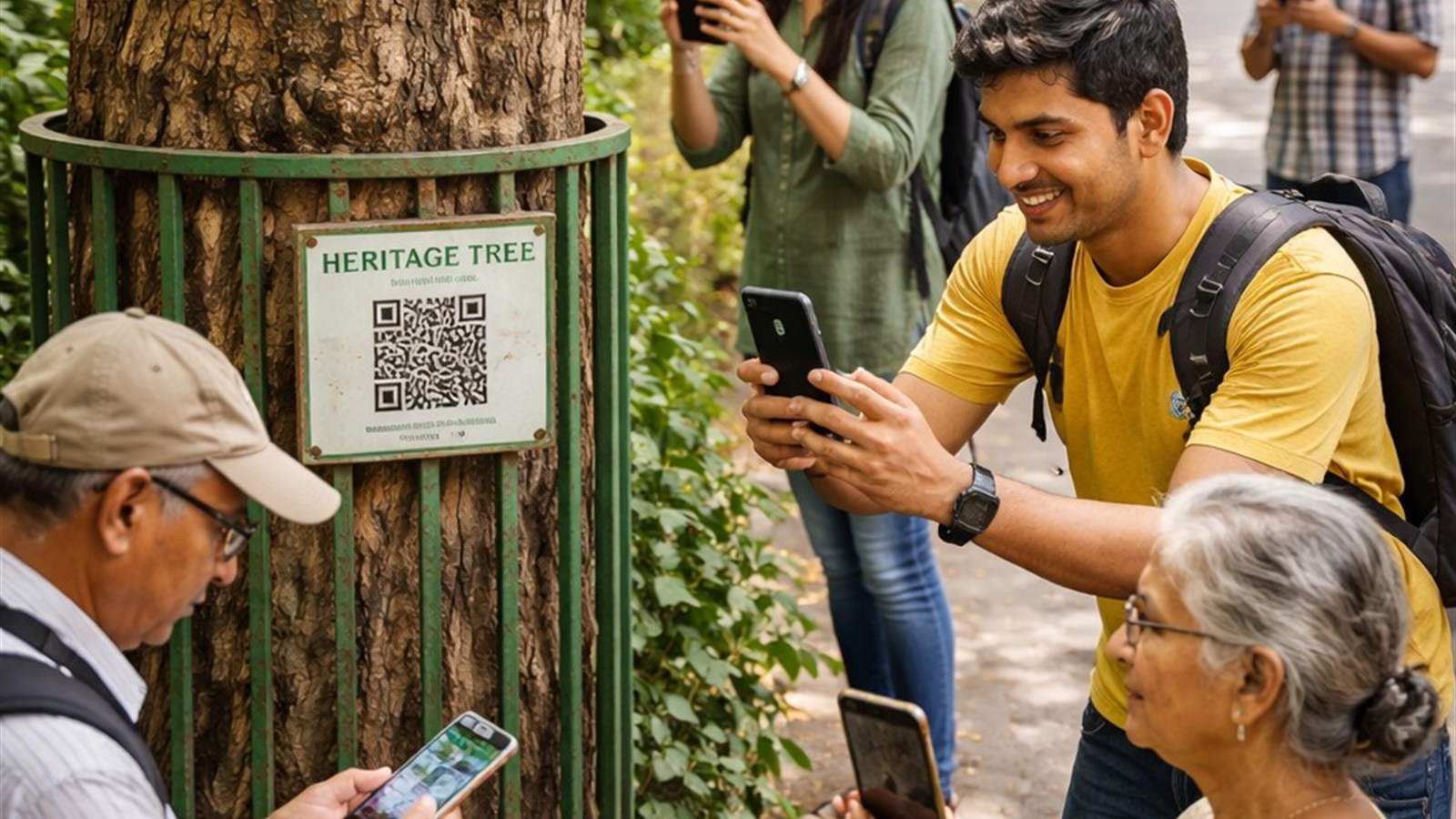
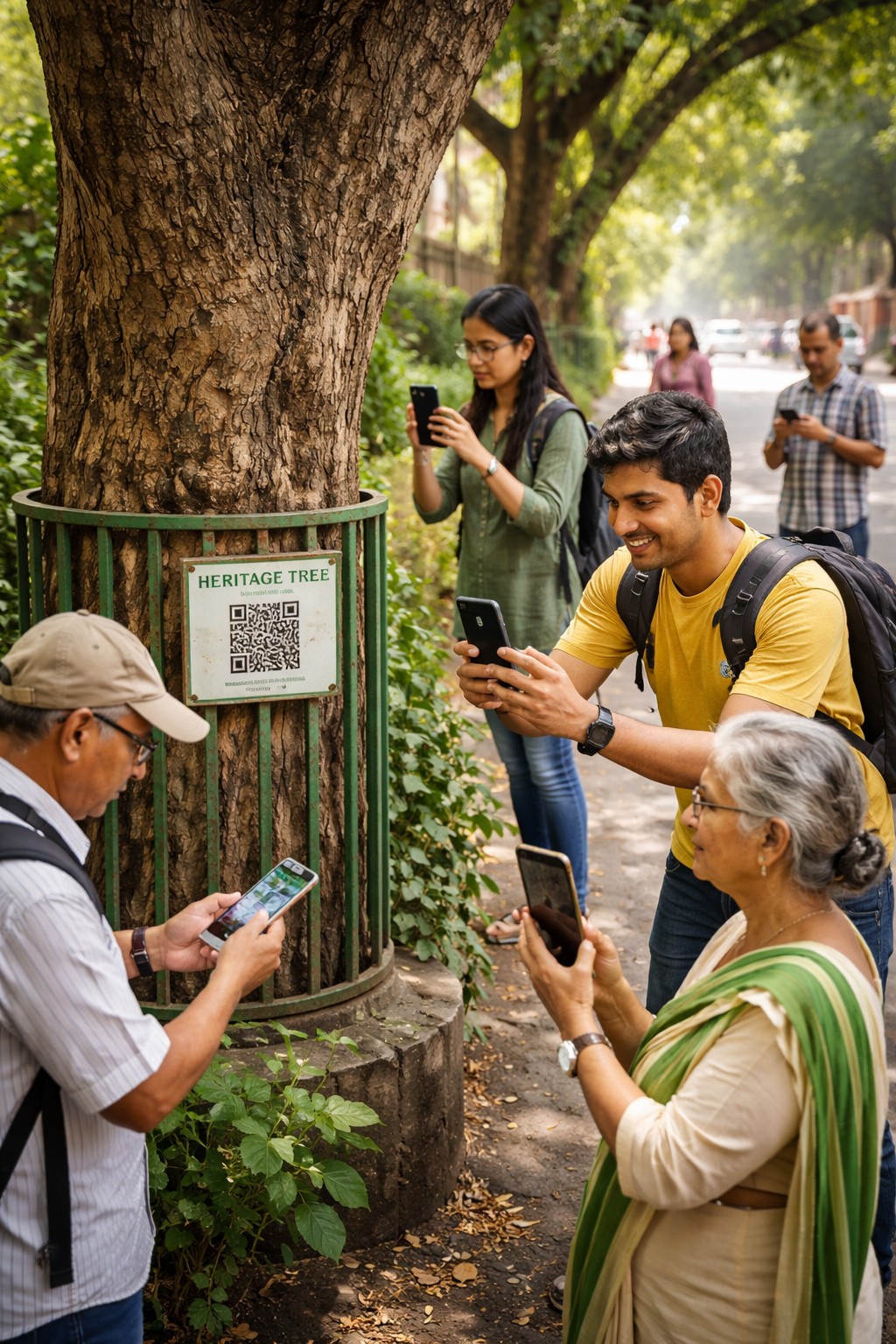
- Geo-tag each old tree
- Assign a unique ID and QR board
- Publish status: healthy, stressed, critical, recovering
Young trees need a different 5-year strategy
Cities often fail because they treat all trees the same.
For saplings and young trees
- native, climate-fit species only
- minimum 5-year maintenance contract with survival targets
- trunk guards that do not choke bark
- summer watering calendar with accountability
- annual survival audit, not plantation-event counting
For mature and heritage trees
- no trenching in critical root zone
- no permanent concrete collaring
- mandatory pre-construction arborist report
- utility alignment around tree roots, not through them
Miyawaki is useful but not a universal replacement
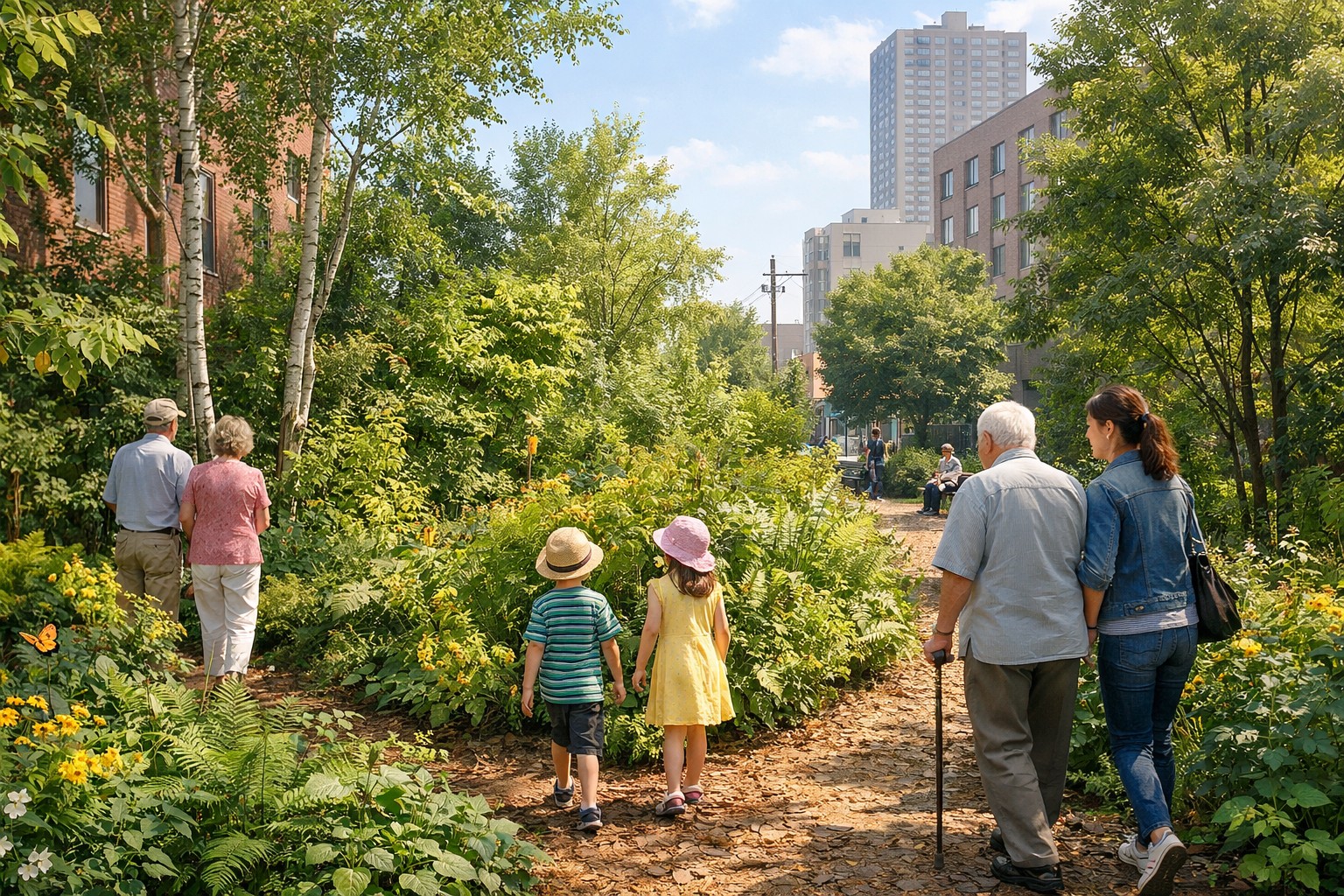
Miyawaki can revive small degraded patches quickly, especially in dense urban pockets.
But it is not a substitute for preserving old trees and natural urban forests.
Use Miyawaki where suitable:
- small vacant urban parcels
- noise and dust buffers
- institutional campuses with long maintenance commitment
Do not misuse Miyawaki as an excuse to cut mature trees and then claim compensation.
Citizen action playbook for illegal felling
When cutting starts suddenly, especially at night, speed matters.
First 24 hours checklist
- Record geo-tagged photos and timestamped videos from safe distance.
- Capture vehicle numbers, contractor board, and location markers.
- File immediate complaints to local forest authority, municipal body, and police station.
- Notify legal aid or environmental groups with evidence package.
- Publish factual updates, avoid abuse and unverified accusations.
- Demand copy of felling permission and compensatory plantation plan.
Digital tracking system citizens can build
- open tree map by ward using shared spreadsheets or civic apps
- monthly volunteer canopy walk audits
- QR stickers for heritage trees
- rapid alert groups for emergency felling events
- RTI based tracking of sanctioned vs actual felling
What to demand in writing every single time
- copy of permission and exact tree count
- species list and girth class list
- geo-referenced map of each tree to be cut
- compensatory plantation site, species, and maintenance budget
- survival accountability officer with contact details
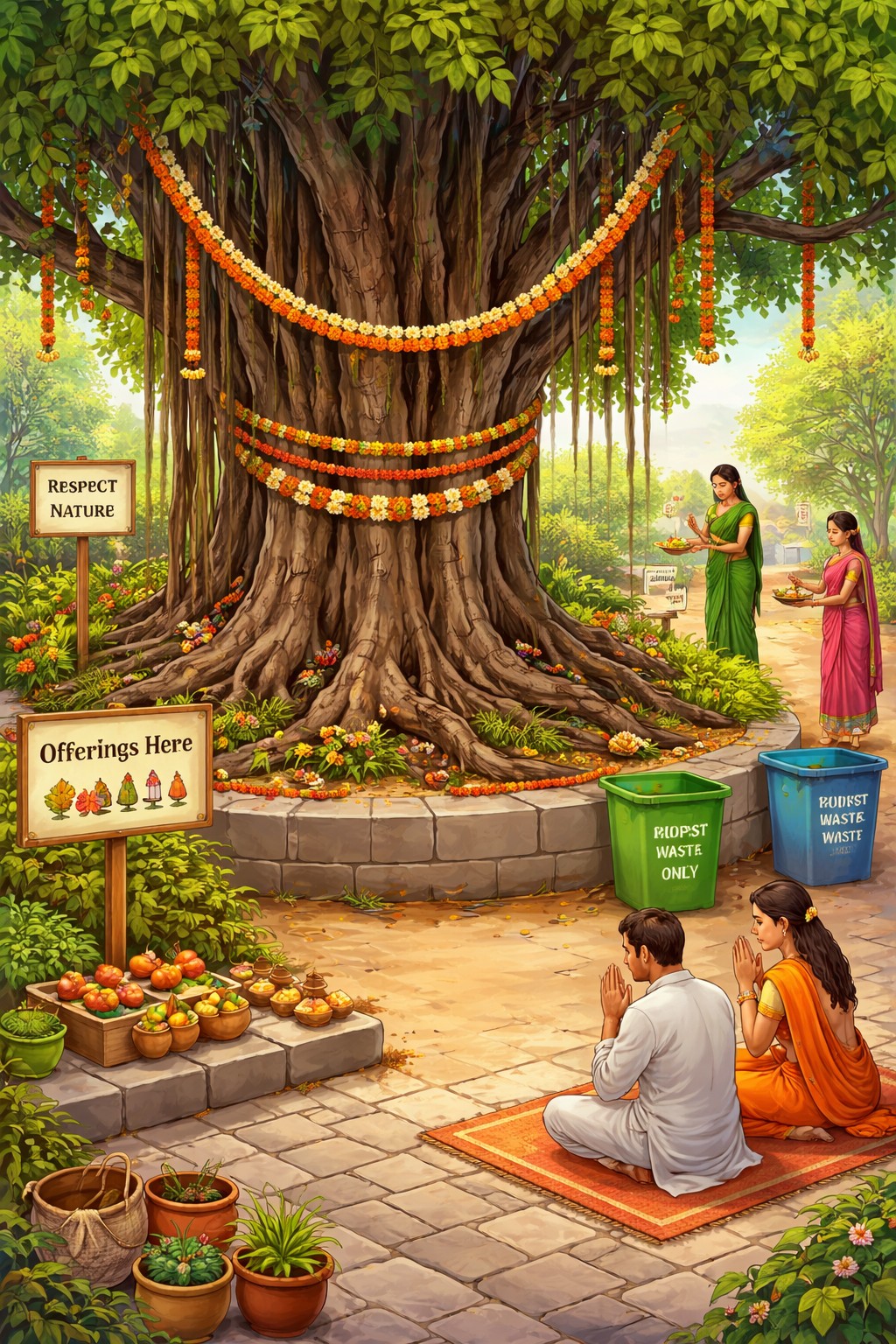
Faith with care: how to protect sacred trees without harming them
Respect and science can coexist.
Avoid at roots:
- milk, sweets, salt, oil, chemical colors, plastic cloth
Prefer these alternatives:
- water bowl for birds near, not on roots
- earthen lamp stands away from trunk bark
- flower offerings in raised trays, not soil pits
- weekly cleanup around sacred trees
This way devotion protects life instead of damaging it.
Policy demands that cannot be diluted anymore
Anti-tree-crime framework
- no night felling except certified emergency and public disclosure within hours
- compulsory bodycam and geotag logs during felling operations
- third-party independent observers for high-value old trees
- criminal liability for forged plantation completion records
Urban planning framework
- every major DPR must include tree-risk and canopy-loss budgeting
- heritage tree register with legal non-negotiable protection class
- city-level tree ombudsman with time-bound complaint disposal
- ward-level annual canopy report, publicly downloadable
What governments and local bodies must change now
Non-negotiable reforms
- no night felling without public digital notice and live permit access
- compulsory tree census with annual update
- independent urban tree authority in each major city
- criminal penalties for fake plantation reporting
- compensatory afforestation based on canopy-equivalent value, not just sapling count
- mandatory survival bond for agencies approving tree removal
Road and highway design reforms
- permeable shoulders where possible
- root bridges and soil cells near mature trees
- design detours around heritage trees
- enforce runoff filtration before recharge trenches
A practical 12-month city target model
By month 3:
- identify top 500 old stressed trees in city limits
- protect and geo-tag all of them
By month 6:
- complete root-zone rescue for at least 60 percent of identified trees
- launch public survival dashboard
By month 12:
- reduce annual urban tree mortality by 30 percent
- verify survival of all new plantation batches with third-party audit
Conclusion
If a city cannot protect its oldest trees, it has no right to call itself modern.
Flyovers, corridors, and townships can be built again. A 200-year-old living tree cannot.
The real question is not whether development should happen. The real question is whether development can happen without ecological blindness.
Our generation still has a narrow window to choose:
- concrete without shade
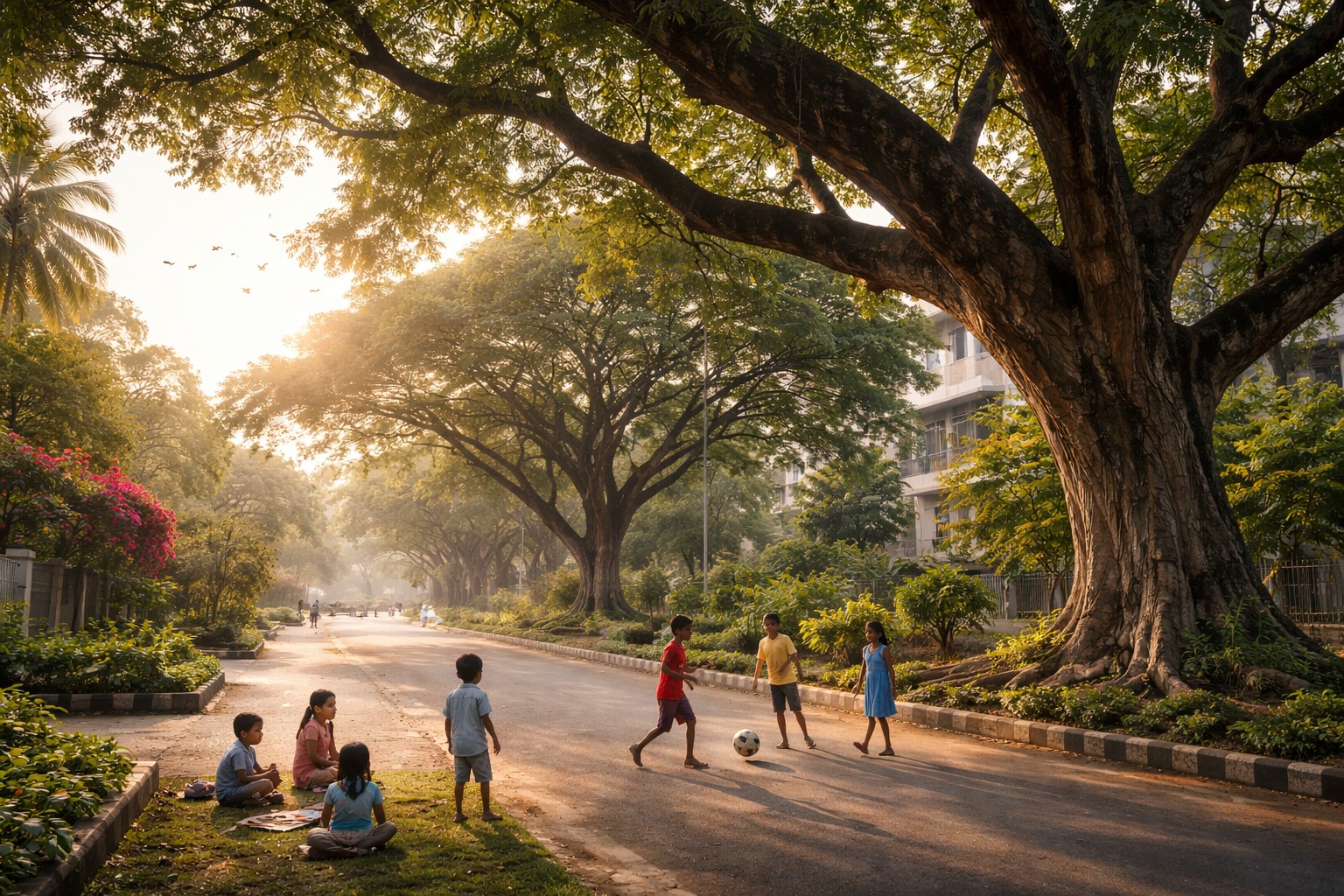
- or progress with living roots
Choose living roots.
Additional visual collage
Public-domain references for further reading
- https://indianexpress.com/article/india/no-tree-felling-in-mumbais-aarey-without-our-nod-supreme-court-9772401/
- https://www.hindustantimes.com/india-news/over-2-lakh-trees-to-be-felled-in-hasdeo-arand-for-mining-centre-tells-rs-101721908229724.html
- https://news.abplive.com/states/chhattisgarh/chhattisgarh-news-ambikapur-tree-felling-in-hasdeo-region-resumed-chhattisgarh-bachao-andolan-1713879
- https://indianexpress.com/article/explained/as-ngt-clears-great-nicobar-project-a-look-at-its-strategic-importance-and-ecological-fallout-10539365/
- https://www.sansad.in/getFile/annex/260/AU1648.pdf?source=pqars
- https://www.thehindu.com/news/national/uttar-pradesh/trees-axed-for-kanwar-yatra-route-by-up-govt-without-final-approval-fsi-tells-ngt/article69267901.ece
- https://www.hindustantimes.com/cities/noida-news/kanwar-marg-road-project-ngt-seeks-extent-of-tree-cover-lost-101729016296026.html
- https://www.thehindu.com/news/national/maharashtra/kumbh-mela-ngt-stays-tree-felling-in-nashik-till-apr-28-mayor-defends-move/article70842532.ece
- https://timesofindia.indiatimes.com/city/nashik/activists-halt-nmcs-tree-felling-in-dindori-gangapur-roads-after-ngt-stay/articleshow/130095490.cms
- https://www.thehindu.com/news/national/delhi-ridge-tree-felling-case-sc-finds-dda-officials-guilty-of-criminal-contempt-but-holds-its-hand-considering-capfims-overarching-public-interest/article69628257.ece
- https://www.newindianexpress.com/thesundaystandard/2024/Jul/14/ngt-orders-satellite-images-after-one-lakh-trees-felled-for-kanwar-yatra-road
- https://www.jagran.com/haryana/panchkula-haryana-khair-tree-theft-2-dfos-suspended-sit-probe-intensifies-40180023.html
- https://www.amarujala.com/haryana/panchkula/range-officer-and-forest-guard-suspended-in-panchkula-khair-tree-felling-case-panchkula-news-c-87-1-pan1001-134572-2026-03-27
- https://www.hindustantimes.com/cities/mumbai-news/stir-in-nashik-over-chopping-of-1700-trees-to-set-up-sadhugram-101763839479113.html
- https://frontline.thehindu.com/environment/supreme-court-stops-tree-felling-hyderabad-kancha-gachibowli-students-protest/article69407560.ece
Tags
About the Author

Vikas Singh "विमुक्त"
Editor of CogniSocial Research
Software Professional, Social Psychologist, Digital Marketer, Environmental & Civil Rights Activist. Researching how digital platforms shape human cognition and behavior, while advocating for social justice, environmental protection, and civil liberties.
Learn More About Author
Social Linksconnect with me